
Small Halls, Big Conversations: A Note from Big Bras d'Or Community Hall
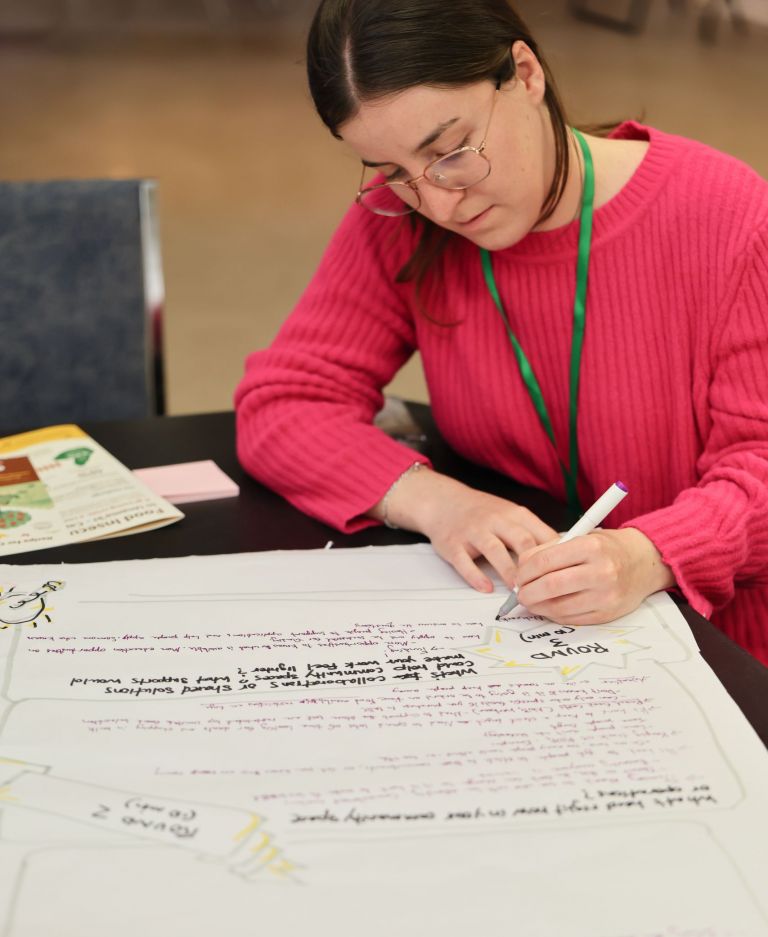
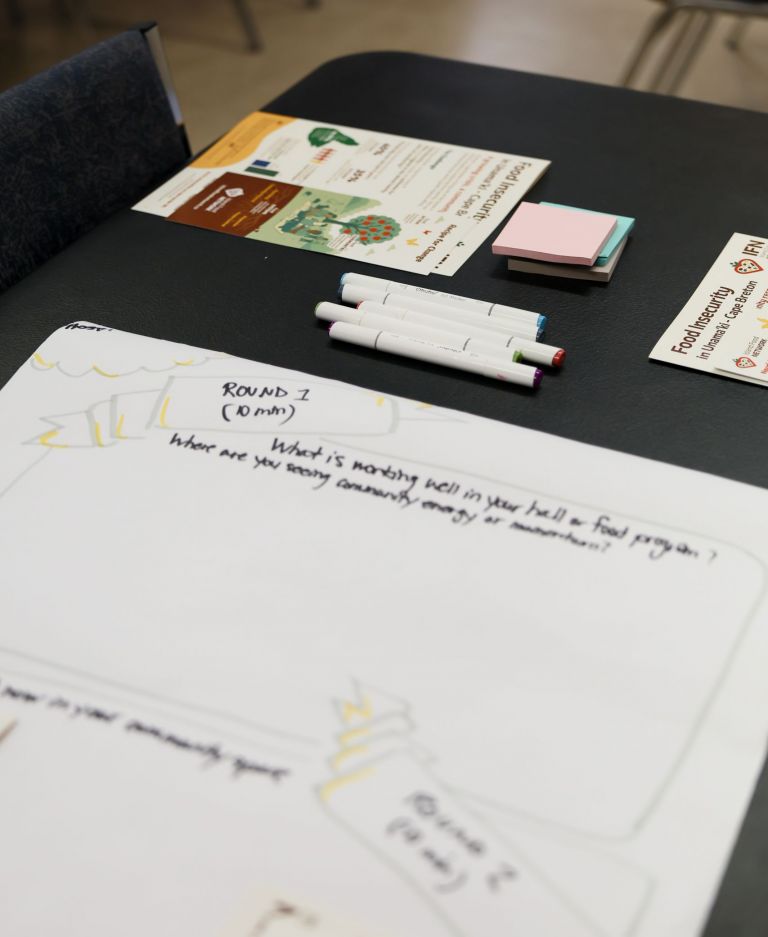
Members of the Homeward Bound team recently attended a Small Halls event in Big Bras d’Or, a gathering focused on something deceptively simple: talking with people about why “third spaces” matter to them, what these gathering places need to survive, and how we might better support them. A “third space” is a space that is not home and is not work but is still important to a person’s life.
The participants met at one small hall, representing several smaller groups. They were a strong core of regular volunteers who’ve been making third spaces run for a long time. They are the invisible infrastructure underneath the success of these spaces; years of relationship-building, quiet coordination, the kind of institutional memory that doesn’t show up in a budget line. These spaces run on commitment that predates any particular funding cycle, and that’s both their strength and their vulnerability.
The conversations were rich. People talked about how community organizing can tip into overwhelm when the ask is constant and the capacity is less consistent. About how loneliness and isolation aren’t just personal experiences, but rather how they’re structural outcomes when the social calendar empties out: no dances, no Halloween, no regular reasons to show up somewhere and be recognized. Someone described how their hall had “become like a church,” not in a religious sense, but as a site of belonging. A place people came to because the alternative was staying home alone.
This matters enormously for how we think about aging in place in rural Atlantic Canada. The dominant policy conversation tends to focus on healthcare access, housing, and transportation, the functional prerequisites for staying in your community as you age. But third spaces are doing something different and arguably harder to replace. They’re where social identity gets maintained. Where people remain known, not as patients or clients, but as neighbours, as people with history and opinions and bad jokes. When those spaces disappear, something happens to the texture of daily life that doesn’t show up in a health outcome measure but absolutely shows up, eventually, in everything else.
What came through clearly at Big Bras d’Or was that the groups gathered there understood this intuitively, even if they didn’t use that language. They were articulate about what these spaces provide, things such as safety, inclusion, a reason to get dressed and leave the house. They were equally articulate about what threatens them: grant dependency, volunteer burnout, leadership succession, governance gaps. The challenge of sustaining scale and purpose when the community itself is small and already stretched thin.
Initiatives like Homeward Bound NS and networks like the Island Food Network are trying to take this seriously; to understand third spaces not as nice-to-haves but as functional components of the conditions that make aging in place possible. The Small Halls model is an interesting case because it’s explicitly designed around the gathering as the point, not the programming. As one person put it, using the image of a Bird Symphony: each instrument adds a layer, but it’s the people and the community that actually make the music. The hall is infrastructure. The gathering is the thing.